At a glance
- Project length
- From 1 week to 4 weeks
- Start dates
- Year round. Choose any date to arrive.
- Arrival airport
- Cusco (CUZ)
- Accommodation
- Local host family
- Meals
- Breakfast, lunch and dinner
- Airlines
- Lan Peru, American, Delta, Spirit, Copa, Taca, Iberia
- Vaccinations
- Routine Vac, Hep-A and Typhoid wwwnc.cdc.gov
Volunteer Peru Delve into a new language. This is a great opportunity to take Spanish lessons while being part of a community project in Cusco/Cuzco. Be fully immersed in Peruvian culture, learn Spanish, live with a local host family, all the while contributing to the volunteer project.
Spanish lessons are half day while you volunteer the other half day. Lessons from 1 to 4 weeks, if you need more lessons you can pay locally to our coordinator. Language Immersion classes can be combined with any of the Cusco/Cuzco based volunteer projects: teaching, medical, orphanage support, pre-medical. Language lessons are given by local tutors. Lessons focus on conversation practice, grammar, vocabulary and will be customized based on your Spanish levels.
- 17 years and over. W/ parents if under
- 24/7 local staff in country
- Tax deductible and fundraising options
- Accommodations safe & friendliness
- Spanish Lessons available if needed
- Work Schedule 4-8 hours a day
- Airport Transfers included abroad
- Programs start at any day
- No Language Requirements
- Available for Special Groups
Country Info
Country Details
Are you ready to help people in need, immerse yourself in the sights, sounds and culture of a new country and have the experience of a lifetime? With poverty, disease and a lack of skilled providers putting a strain on important services such as health and childcare in developing countries across the globe, there are many corners of the world which rely on the help of volunteer travelers like yourself.
Volunteer in Peru with A Broader View Volunteers a top rated non-profit charity organization, which works tirelessly to support our wonderful volunteers and serve the local communities where our volunteer programs are located. Placements in Peru are based in the Mayan city of Cusco. Program placements are tailored to the volunteers different interests and skill sets, but still allow volunteers time to explore the Andean local culture and activities during their free time.
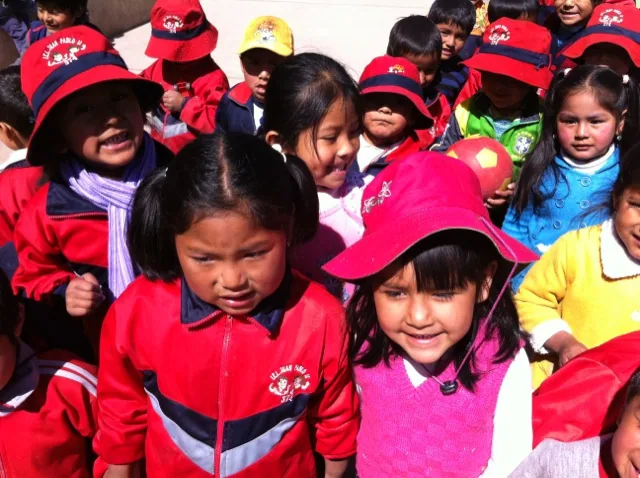
The type of programs in Peru vary widely, offering everything from education to health care. Volunteers can choose between seven options in Cusco. International volunteer help is not only appreciated by the local community, it is severely needed by the millions of Peruvians living below the poverty line. With thousands of children living and working on the streets, as is so often the case in developing countries like Peru, our volunteer programs are designed to support the needs of local teens and children in desperate need of assistance.
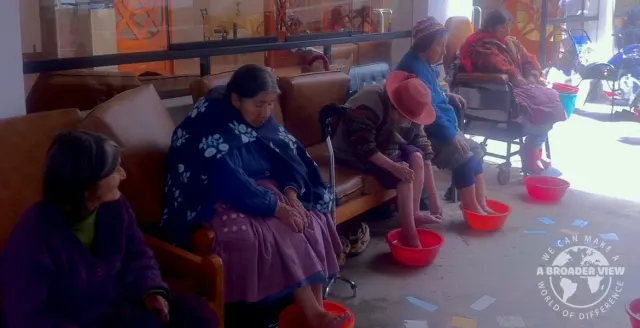
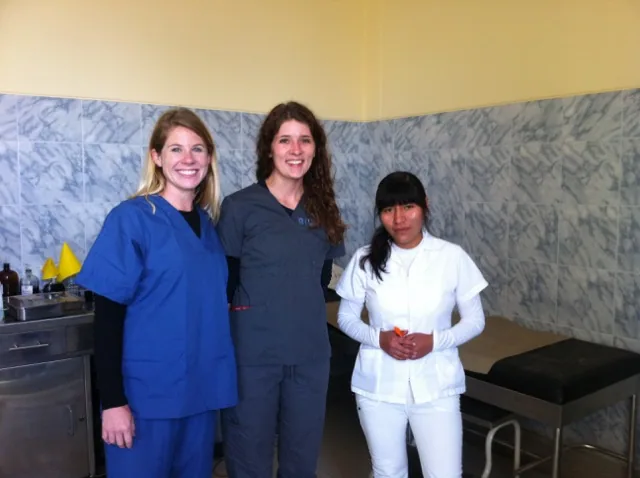
Many of our volunteer abroad programs cater to underprivileged women and children’s care, education and health requirements. Our extensive range of social programs in Cusco, Peru includes: medical, premed/prenurse internships, teaching in primary and secondary schools and volunteering in orphanages and day care centers. To help you settle into your placement, we also provide the opportunity to combine all of our programs with Spanish Immersion Lessons during your time in Peru.
Volunteering in Peru is an incredibly rewarding experience. We welcome volunteers of all ages and from all backgrounds to join us. Whether you’re seeking volunteer abroad programs for college students or voluntary work for over 60s, as a trusted non-profit organization which prioritizes the safety of our volunteers, we are the go-to for volunteers across the globe. We also offer customized programs with flexible arrival dates to best suit the needs of the remarkable volunteers we depend on to help us make the world a better place.
If you’d like to volunteer, Peru is just one of the countries we’ve taken under our wing, supplying a steady flow of volunteers and providing year-round financial support to local projects in Cusco. Wherever you decide to volunteer, A Broader View give you the opportunity to participate in meaningful community service work, learn a foreign language, make lifelong friends and discover that one person really can make a difference. Your search for the best volunteer abroad programs ends here – volunteer in Peru with us and gain A Broader View of the world.
Coordinator
Welcome to Peru 🇵🇪 (Bienvenidos a Peru!). Our Names are Maria Elena and Beatriz and we are your ABV coordinators while you are staying in Peru. Our country has one big city, Lima. But you will be working in Cusco which is a place of 435.000 inhabitants out of over 31 million population. We will be ready for support 24/7 in case you need to contact us urgently. We will introduce you to your volunteer location and staff.
You are most welcome to seek our assistance and don’t hesitate to ask us questions while in country.
Safety and Security
The safety of our volunteers is paramount for A Broader View Volunteers. The majority of ABV Volunteers travel and serve without major incident. However, programs are based in some of the least developed countries and in some of the most remote areas in the world, health, safety, and security risks are an unavoidable part of life and international service. To address these concerns and to safeguard the well-being of our program participants, A Broader View has safety protocols and security procedures for all programs:
- Security: All project sites, local in-country staff and accommodation sites have gone through a rigorous filter and have been hand selected. ABV has spent almost 11 years cultivating and strengthening of our local partnerships & host family relationships. In-country staff visits, daily research of local conditions, as well as weekly checkup of our host families and accommodations are conducted. Site selection is based on criteria including; access to medical, banking, postal, and other essential services; access to communication, transportation, and local markets; availability of adequate housing and living arrangements.
- Pre-Departure Guide: Your ABV account will have a detailed volunteer guide. Volunteers are provided country information, packing lists, customs and language information, and much more. ABV also provides information about visa requirements, vaccinations, climate, weather, and safety and security issues specific to the country.
- Volunteer Summary: A full month before traveling volunteers are provided a detailed account of their volunteer project (including supply/donation list), arrival procedures, emergency contact information, accommodation details and the full name, phone and email of their local ABV Coordinator.
- Overseas Staff and communication: Our local staff support is immeasurable in their professionalism and dedication to the volunteers under their charge. The majority of ABV staff coordinators have been involved since the very start (over 11 years) and are well experienced handling the unexpected such as situations where volunteer students become ill, suffer accidents, are the victims of pick pockets. ABV staff is trained to react in a responsible and levelheaded way when emergencies do arise. They will do whatever is necessary to assure this, whether this means obtaining prompt and appropriate medical attention, embassy intervention or local authorities.
- Host Families and accommodations: Our local volunteer guesthouses, onsite project dorms and host families have been hand-picked. A Broader View accommodation have specific standards for the hygiene, cleanliness, location and comfortable living conditions for our volunteers. Telephone access is available 24/7 and most sites have internet access. Volunteers have to follow the curfew of the host accommodation.
- Arrival Meeting/Orientation: ABV programs provide a customized arrival plan. We can arrange your arrival/pick up at the airport, bus station or local hotel. Start your program with peace of mind, having the local ABV staff meeting you when you arrive in-country. Volunteers are provided orientation before starting their program. Orientation schedules vary from country to country but will include acclimation tours of the local town/city, accommodation neighborhood, geolocation map description, program location, main interesting points in the city or area. Emergency and medical protocols will be discussed and also address safety and security issues specific to the community volunteers live and work in.
Every staff member of A Broader View is committed to providing volunteers with the support they need to successfully meet the challenges they will face to have a safe, healthy, and productive service. The success of each ABV volunteer is our prime goal. We rely on volunteers to exercise personal responsibility and demonstrate both a keen awareness of the world around them and a willingness to adjust their behavior in a manner that will enhance their safety and well-being. In the end, your efforts will be rewarded with an incredible, unique experience.
The emergency lines are staffed by an A Broader View:
- Communicate late/missed/flight connections during travel days
- Notify a Volunteer of an emergency (e.g. critical illness or death of a family member)
- Respond to family questions about a Volunteer's status (if problem occurring in-country)
Weather
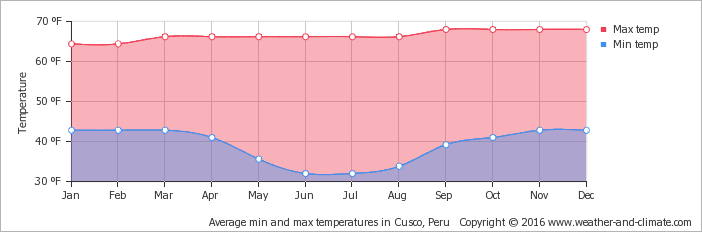
**What's the best time to go to Cusco in Peru? Here are some annual weather facts we collected from our historical climate data:
**
- During the months of September, October, November and December you are most likely to experience good weather with pleasant average temperatures.
- Most rainfall (rainy season) is seen in January, February, March and December.
- Cusco has dry periods in May, June, July, August and September.
- On average, the warmest month is September.
- On average, the coolest month is July.
- January is the wettest month.
- June is the driest month.
City: Cusco | Population: 435000 | Languages: Spanish
Currency: Peru Sol (PEN) | Time zone: UTC−06:00
Reviews & Multimedia
Reviews
I loved when the kids would know my name and get excited to see. It meant to me that I was making them happy and that alone made me incredibly happy to be there. During the weekdays, I would get up at 8 am and go to volunteer. I would come home for lunch at my host mom’s.
Paige
Nationality: USA
Age: 23
This experience as a whole has surpassed my expectations as a volunteer. I am taking way more out of this program that I feel I even put in. The growth that you see yourself is something only time can prove. ABV was the more credible program I found online after many weeks of research.
Katerina
Nationality: USA
Age: 25
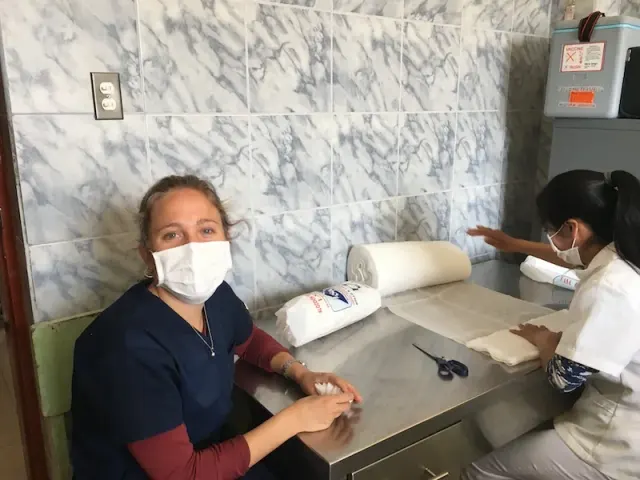
I think this was a great experience/opportunity for me. I worked at the dental hospital and it was great to see how different they treat their patients and the different accommodations they have to make. Living at Maria Elena´s was very nice.
Anna
Nationality: USA
Age: 22
Photos Gallery
Videos
Extras
Tour and weekend trips
Once in country our local coordinator can help you find the most reliable and safe tour agencies for weekend trips, you can pay in cash or in most locations with a credit card. These tours are not part of the ABV fees.
Machu Picchu Day Trip from Cusco
Spend a day exploring the Inca citadel of Machu Picchu during this all-inclusive day trip leaving from Cusco. Discover this renowned mountaintop Inca site with a guide, learning about its construction, history and what daily life was like for its residents. The trip’s relaxed, non-strenuous pace is a great option for first-time visitors, families and solo travelers alike, and features three different train ride options. The trip also includes round-trip hotel transport, transfer from Cusco to Machu Picchu (via train and bus) and the site entrance fee.
Sacred Valley, Pisac and Ollantaytambo
Uncover the fascinating architecture and culture of the ancient Incas during this 8- to 10-hour day trip covering the highlights of Peru’s Sacred Valley from Cusco. Check out the market in Pisac, stopping on Sundays to observe its famous mass. You’ll also visit the Inca settlement at Ollantaytambo and explore the ruins of its fortress and the Temple of the Sun, a mysterious structure composed of giant 12-foot (3.5-m) stones. Your Sacred Valley tour also includes a guide, lunch, entrance fees and round-trip hotel transport.
Sacsayhuaman Archeological Park and Cusco Sites
Marvel at the architectural and archeological majesty of Cusco on a 4-hour tour of the city’s most significant sites. Accompanied by a knowledgeable guide, visit fascinating ruins of Qenco; the sacred temples of Puca Pucara and the ecclesiastical structure of the Cusco Cathedral. Admire exquisite architecture and gain insight into Peru’s alluring history on this enriching excursion.
ATV Tour to Moray, Maras and Salt Flat in the Sacred Valley from Cusco
This tour on ATV is designed for families group, friends etc, whose look for adventure visiting Sacred Valley’s most interesting sites in Cusco city such as Moray archeological site, Maras village and Salt mines of Maras, Feel the adrenaline of having total control of your Atv.
Rainbow Mountain Full Day Tour from Cusco
Spend a day hiking through Peru's famous candy-striped landscape, Rainbow Mountain, on this guided tour from Cusco. Hike with a guide for 5.5 miles to a viewpoint of the scenic mountainside, and then head down past glacial lagoons and through the dramatic landscape before returning to Cusco.
Humantay Lake Full-Day Hike from Cusco
Get a taste for Peru’s high-alpine scenery and ancient Inca customs during this full-day hike to Lake Humantay from Cusco. Ascend to this scenic body of water located at 13,779 feet (4,200 meters), learning about its sacred place in Inca mythology during your climb. An included buffet lunch back at
Festivals and Festivities
"Fiesta de Ollantaytambo" (Ollantaytambo's Feast) - January 6
Ollantaytambo, Feast that celebrates the "Reyes Magos" (Magic Kings), religious processions, great folkloric dances.
"Fiesta de San Sebastián" (San Sebastian's Feast) - January 20
San Sebastian, religious feast of the town's patron, great folkloric dances and invitation of food and fruit.
"Ch’iaraje" - January 20 - Province of Canas, District of Yanaoca (Community of Checa). Cusco
A ritual fight among the people of the communities of Checa and Quehue who struggle against each other in war games to stimulate the fertility of the land. The winning community receives the larger portion of land. The men are armed with slings, leather whips, and sticks and dress in vests decorated with flowers. The women assist by caring for the horses, collecting stones, and cheering for the men with songs.
"Carnavales" (Carnivals) - The festival of Joy - February (variable)
Peruvian carnivals are marked by the festive character of Andean areas, which regularly break with their solemn traditions. Beyond regional variations, a common characteristic of nearly the entire highland chain is the ritual of the yunza, called umisha in the jungle and cortamonte on the coast. It involves artificially planting a tree trunk laden with gifts, around which the guests dance until it is chopped with a machete or an ax. The couple who make the final hack that brings down the tree will then both be in charge of organizing the yunza next year. Peruvians across the country are extremely fond of tossing buckets of water at each other during this festival, so onlookers would be wise to take precautions.
"Toqto Fights" - February 2nd - Province of Chumbivilcas, District of Livitaca (Toctopata) Cusco
These take place in Toqto, a town located between the Districts of Yanaoca and Livitaca. The fights last three days and represent the past when the people fought to receive more land. On the first day, people settle down in the place; the second day, one-on-one fights begin, and later, groups of five to ten men are formed. After eating and drinking, everyone fights on the third day, and when the games end, the wounded are taken care of and the communities perform the qhaswa (a party for both winners and losers)
Lord of the Earthquakes - "Señor de los Temblores" - The Black Christ and the Carmesí flower - 2nd half of March-1st week of April
Ever since 1.650, when the faithful claim that an oil painting of Christ on the Cross held off a devastating earthquake that was rattling the city of Cusco, the locals have been rendering homage to the image of Taitacha Temblores, the Lord of the Earthquakes. The celebration is held on Easter
Monday against the backdrop of Easter Week in the city of Cusco. This celebration is of particular interest because it allows onlookers to get a glimpse of the fusion of Andean religions and Christianity. The Cusco Cathedral, where the image is kept, is built on the foundations of the ancient temple dedicated to the pagan god Apulla Tikse Wiracocha. The image of the Lord of Earthquakes is borne aloft in a procession through the streets of the city just as the Incas used to parade the mummies of their chieftains, high priests and supreme rulers. In the end, the dominating part of the celebration involves the ñucchu flower (salvia esplendes), used as an offering to the ancient gods Kon and Wiracocha. The same flower today is used to weave a crown for the Lord of the Earthquakes. This crimson colored flower, whose petals are scattered by the faithful over the venerated image, symbolizes the blood of Christ. The image used today was donated by King Charles V, and despite centuries of smoke from the candles and incense, no one has dared to restore the blackened painting, that has given the Christ a somber aspect and a dark countenance.
"Qoyllority" - May (variable) - Province of Quispicanchi, District of Ocongate Cusco
A pilgrimage to the summit of MountSinaqara. Along the way, there is a procession, some dancing, musical groups performances, fireworks, and a symbolic alasitas market (works in miniature). This festival unites two traditions – Andean and Catholic – since it celebrates both the image of Christ that appeared on a rock at 4750 masl / 15.584 fasl and the worship of the Apu Ausangate.
"Lord of Torrechayoc" - May (variable) - Province of Urubamba, District of Urubamba Cusco
This festival began in 1860 when an enormous cross was placed in the snow, and the opening of a section of railway (Urubamba-Lares) was celebrated with a mass. Years later, the cross was carried to the city of Urubamba where they began a worship of it. In addition to a mass, the cross is carried in a procession with all its jewels. There are fireworks, parades of dancers, bullfights, and cockfights..
"Cruz Velacuy" - May 2
Religious-pagan feast, takes place in the country during the night, where the crosses in the hills are venerated, during the next morning these crosses are taken to the churches.
"Corpus of Coyllorite" - First week of full moon in June
Religious-pagan festivity, in which the peasant attend with their family and an image of the lord of Coyllorite, joining in a pilgrimage to the snowy mountain "Coyllorite". The men climb to its peak and should return with big pieces of ice blocks over their back in order to receive blessings. Folkloric dances, processions. During the celebration of this feast it is prohibited to drink alcoholic beverages and also to have sexual contact, that is a common characteristic in the festivities of the Andes.
The largest native Indian festival in the Americas. In this mass pilgrimage to the sanctuary of Sinakara, on the day of the Holy Trinity, a group of villagers climbs snow-capped Mount Ausangate (6,362 m.a.s.l.) in search of the Estrella de Nieve (Snow Star) resting in large blocks of ice, that will then be taken by the villagers, on their backs to their communities, to irrigate their land.
"Qoyllur Rit'i" - June / first week"
The largest pilgrimage of all indigenous nations of the Americas. More than 10 thousand people arrive in Sinakara, at the foot of the Ausangate mountain (6362 m.a.s.l. / 20873 f.a.s.l.), to pay homage to a painting of Child Jesus. The ascent of a group of strong Queros to the snow-capped summit to seek the Star of the Snow (Qoyllur Rit’i) in the mountain’s heart is full of symbolism. They will take large blocks of ice on their shoulders back to their Quechua communities to water their lands with sacred water..
"Corpus Christi" - June 11
The festival of Corpus Christi has been celebrated all over Peru since colonial times, but reaches a
high point in Cusco. Fifteen saints and virgins from various districts are borne in a procession to the Cathedral where they “greet” the body of Christ embodied in the Sacred Host, kept in a fabulous gold goblet weighing 26 kilos and standing 1,2 meters high. Sixty days after Easter Sunday, the members of each nearby church bear their patron saint in a procession to the chimes of the María Angola, Peru’s largest church bell, forged in a copper-gold alloy in the sixteenth century by local artisan Diego Arias de Cerda. At night everyone gathers together, for an overnight vigil, where typical dishes such as chiriuchu (spicy guinea pig), beer, chicha and cornbread are served. At dawn the procession sets off around the main square, bearing the images of five virgins clad in richly embroidered tunics, plus the images of four saints: Sebastian, Blas, Joseph and the Apostle Santiago (Saint James) mounted on a beautiful white horse. Then the saints enter the Cathedral to receive homage, time after which representatives and authorities from various communities of Cusco meet in the main square to discuss local affairs. Finally, the delegations return to the churches amidst hymns and prayers. Participate all the towns and Cusco. Is the most important religious feast, in which all the saints and virgins images are taken from the churches to visit the image of Christ that is in the Cathedral. The processions, the street decorations, the fervor of the citizens are an indescribable show.
"Inti Raymi" - June 24
The most important folkloric expression of Cusco.
"Quillabamba Fests" - July 25th – 29th - Province of La Convencion, District of Santa Ana Cusco
This is the anniversary celebration of the Province of La Convencion whose capital is Quillabamba. Every year, a Coffee Queen or “Miss Quillabamba” is chosen. There are also cockfight tournaments, motocross competitions, and the Cocla Fair, which features a music fest with national and international artists.
"Pachamama Raymi or Earth Mother Day" - August 1st - The entire department. Cusco
On this day, the following festivals takes place: Pachamamaraymi in the District of Ccatca, Wataqallariy in the District of Maras, and Kinturaymi in Huasao in the District of Oropesa. This is an Andean ritual that worships and gives tribute to the Pachamama (Mother Earth) in a special ceremony called “payment to the earth” with offerings of coca leaves, chicha de jora, and huayruro seeds (mystical jungle seeds). The rite marks the beginning of the Andean New Year.
"Lord of Huanca" - September 14th - Province of Calca, District of San Salvador. Cusco
The story of the Lord of Huanca began in 1675 when, it is said, Jesus Christ appeared in a cave to Diego Quispe, an Indian. His vivid story inspired one of the best painters of the time to reproduce the picture on a rock. The worship (recognized in 1779) reaches its climax on 14th September, and believers arrive from all over Peru and Bolivia in search of cures for their physical and spiritual afflictions.
"Feria Tikaranticuy" (Tikaranticuy Fair) - December 23
Cusco, ornamental, medical and wild plants fair a colorful show.
"Feria Santuranticuy" (Santuranticuy Fair) - December 24
A festival dating back to the colonial period, it now ranks as one of the largest handicrafts fairs in Peru. It is held every year in Cusco’s Main Square, where the painters of religious images and artisans offer a wide range of Christmas figurines to go with the Nativity scenes found in homes and chapels across Cusco.